January 2026
Ice Dams in the Quad Cities: How Your Gutters Cause and Prevent Them
- Free Estimates
- Fully Insured
- Local & Family-Friendly
- Serving Both Sides of the River
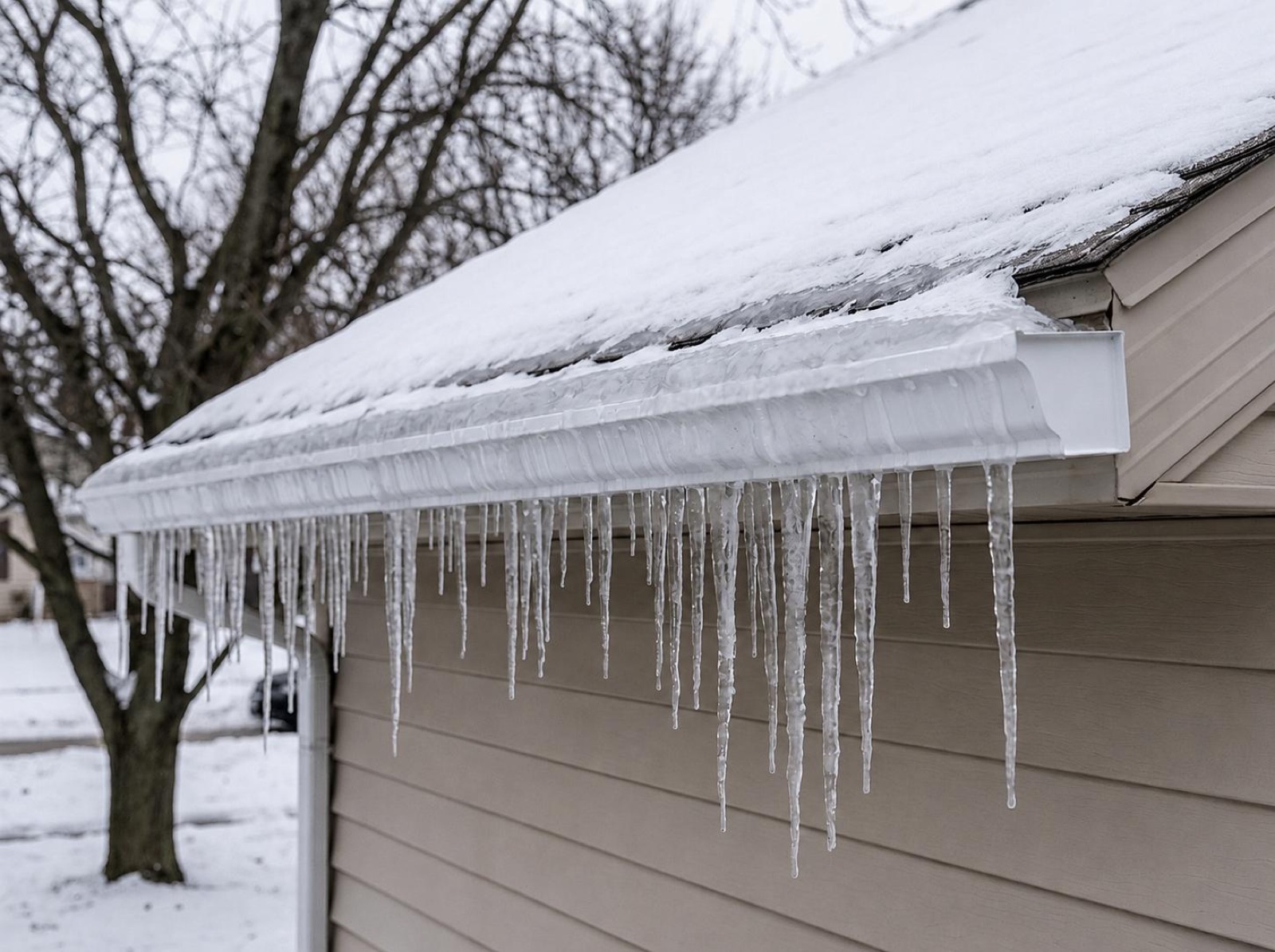
If you've ever seen a thick ridge of ice hanging along the edge of a Quad Cities roof, often with impressive icicles below it, you've seen an ice dam. They look almost decorative, but they can force water back under your shingles and into your home. Our Iowa-Illinois winters, with their repeated freeze-thaw swings, are practically engineered to create them. Here's how ice dams form, the role your gutters play, and how to keep them from damaging your roof and foundation.
What is an ice dam?
An ice dam is a ridge of ice that forms at the edge of a roof and prevents melting snow from draining off. The water pools behind the dam and, with nowhere to go, can work its way under the shingles and into the roof deck, walls, and ceilings. In a Quad Cities winter, a single warm-ish afternoon followed by a hard overnight freeze is all it takes to start the cycle.
How ice dams form in a QC winter
Heat escaping the attic
The root cause is usually heat leaking into the attic. That warmth heats the roof deck and melts the snow sitting on the upper part of the roof, even when it's below freezing outside.
Refreezing at the cold eaves
That meltwater runs down to the roof edge and gutters, which hang out over unheated space and stay much colder. There it refreezes, building up into a dam. Each melt-and-refreeze cycle grows the ice a little more.
Water backing up
Once the dam is big enough, new meltwater pools behind it and backs up under the shingles, the point at which an ice dam stops being cosmetic and starts causing leaks.
Do gutters cause ice dams?
Here's the nuance homeowners often get wrong: gutters don't cause ice dams, attic heat and poor ventilation do. But clogged gutters absolutely make them worse. When a gutter is packed with frozen leaves and debris, it holds a reservoir of ice and water right at the roof edge, giving the dam a head start and a place to anchor. A clean, free-draining gutter can't prevent every dam, but it removes one of the biggest contributors.
How to prevent ice dams
- Keep gutters clear before winter. A late-fall gutter cleaning removes the debris that would otherwise freeze into a reservoir at the eaves.
- Install gutter guards. Gutter guards keep runs from packing with debris, so water drains instead of freezing in a clogged trough.
- Air-seal and insulate the attic. Stopping warm air from reaching the roof deck is the true fix, it keeps the roof cold and snow from melting unevenly.
- Improve attic ventilation. Good airflow keeps the roof surface a consistent temperature so snow melts evenly and drains.
- Make sure downspouts flow freely. Water has to have a clear path all the way to the ground.
Damage ice dams leave behind
Left unchecked, ice dams cause roof leaks, water-stained ceilings, soaked insulation, peeling paint, and mold. The sheer weight of ice can also pull gutters loose from the fascia, bending hangers and separating seams. If your gutters came through the winter sagging, leaking, or pulled away from the house, that's a job for gutter repair before the spring rains arrive and expose the damage.
What to do after a hard QC winter
Once the ice is gone, walk your home's perimeter. Look for gutters that have pulled away, seams that now drip, downspouts knocked loose, and any staining on the fascia. Catching that damage early, and clearing or guarding your gutters before next winter, is the cheapest insurance against a repeat.
Should you remove an ice dam yourself?
Carefully. Chipping at ice with a hammer or hatchet is a fast way to destroy shingles and dent or tear your gutters, and standing on an icy ladder in winter is genuinely dangerous. If you need quick relief, a roof rake used from the ground to pull snow off the lower few feet of roof removes the fuel for the dam without you leaving the ground. Calcium-chloride ice-melt (never rock salt, which corrodes metal and harms plants) placed in a fabric sleeve across the dam can open a drainage channel. But these are stopgaps. The lasting fixes are attic air-sealing, insulation, ventilation, and keeping your gutters clean and free-draining going into winter.
Don't ignore the warning signs
Big icicles hanging off the gutters, water stains creeping across an upstairs ceiling, or damp spots on exterior walls after a thaw are all signals that an ice dam is already pushing water where it shouldn't go. The sooner you act, the less damage accumulates, and the better shape your gutters will be in when spring arrives.
Protect your home before the next freeze
Whether you need a pre-winter cleaning, guards to keep runs clear, or repairs to fix ice-damaged gutters, we can help you get ahead of it.
Call (563) 291-6305 or request a free estimate online today.